

Renovation Budget Planner and Tracker (2026) | Track Costs-Payments
Keep your renovation finances under control. Build and Manage your renovation budget and avoid overspending with our 2026 home renovation expense tracker. Record payments, store invoices, manage your documents and keep your renovation on budget.
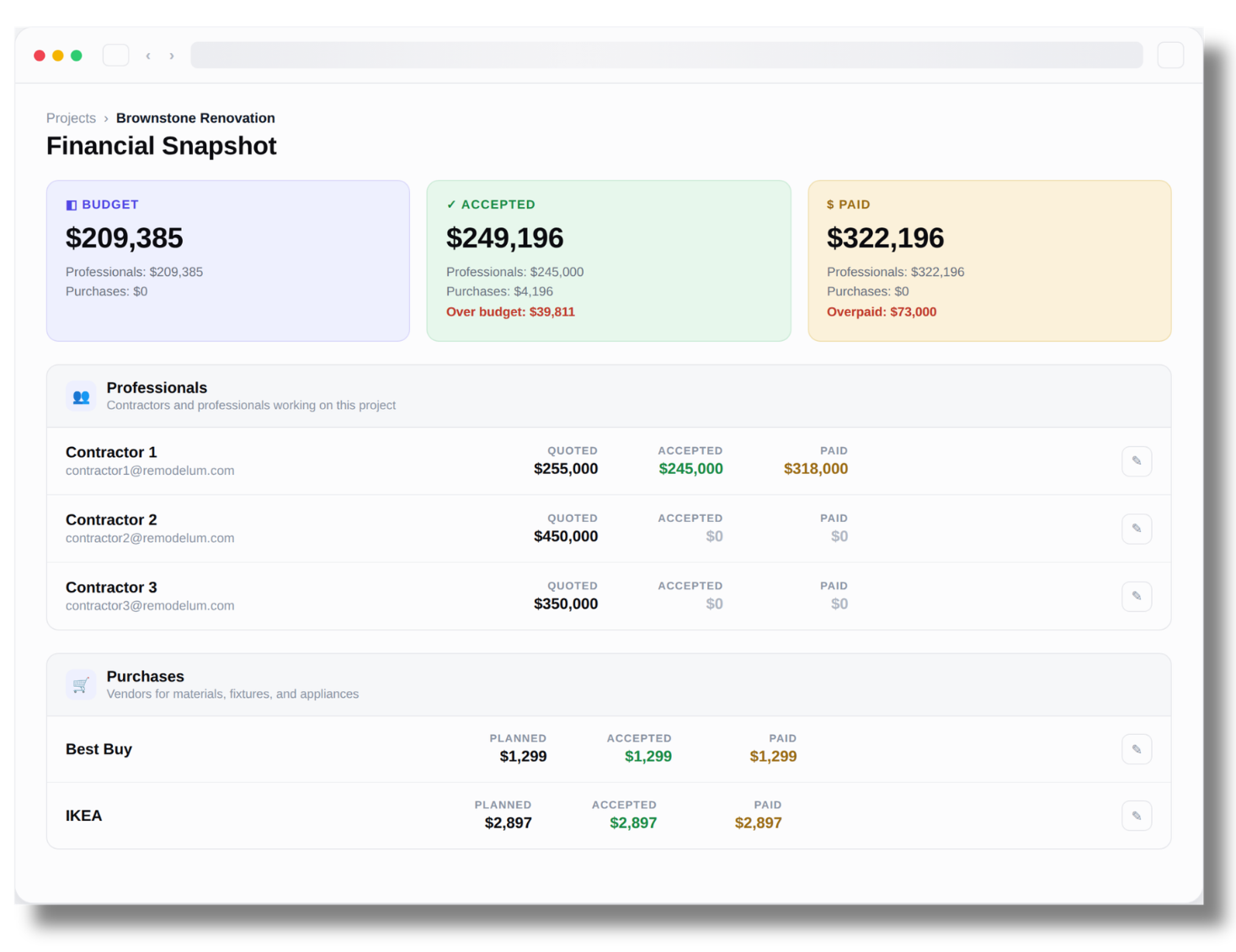
TRACKER OUTPUTHOME RENOVATION TRACKER OUTPUT
Below is a sample budget tracker for a mid-range kitchen renovation, showing what you'll see once your own project is underway — running totals for budgeted, committed, and paid costs, plus a live invoice log as payments come in.
Total Budgeted
$45,000
Total Committed
$38,200
Total Paid
$24,750
Recent Invoices
| Vendor | Category | Amount | Status | Date |
|---|---|---|---|---|
| Superior Cabinetry Co. | Cabinets | $12,500 | Committed | Jul 15, 2026 |
| Stone & Tile Works | Countertops & Tile | $8,900 | Pending | Aug 1, 2026 |
| BuildRight Framing | Framing Labor | $6,200 | Paid | May 28, 2026 |
| ABC Electrical Co. | Electrical Rough-In | $4,200 | Paid | Jun 3, 2026 |
| Premier Plumbing | Plumbing Rough-In | $3,800 | Paid | Jun 10, 2026 |
Showing 5 most recent of 14 invoices logged on this sample project.
WHY TRACKING YOUR RENOVATION COSTS MATTERThe Tracking Problem Every Renovator Hits
Your spreadsheet worked for the plan.
It stopped working when the invoices started coming in:
Invoices arrive late.
Payments are scattered.
Changes pile up.
Remodelum gives you a single source of truth for your renovation budget.
WHAT IS A RENOVAITON TRACKER APPWhat is a Renovation Tracker and Budget App?
-
Easily define the budget needed for your proejct. Adjust if needed along the way.
-
Track all your expenses at a professional and vendor level. Understand deviations at a granular level.
-
Keep a list of all the planned purchases - Add them to your cost logs as you accept them.
-
Keep a record of all the invoices and costs for your renovation.
-
Avoid misunderstandings down the line and help your everyone stay organized by informing them real time on their project’s financials.
HOW TO TRACK YOUR RENOVATION
How to Track Renovation Expenses?
To stay on budget, you need to track more than just what you’ve paid.
Remodelum helps you track:
✔ Budget — your total target cost
✔ Committed — signed contracts and planned costs
✔ Paid — actual payments made
If you only track payments, you’re already behind.
HOW TO GUIDEHow to Track Your Remodel Costs Using Remodelum
Set up your tracker in 3 easy steps
Add your target budget
WHY REMODEL BUDGET IS IMPORTANT
A Renovation Budget Tracker Is More Than a Spreadsheet
A renovation cost estimate tells you what your project might cost.
A renovation budget helps you decide how you plan to spend, by category, priority, and contingency.
The renovation tracker tells you whether you are hitting your target budget and by how much.
Remodelum turns early cost assumptions into a working budget you can refine, compare against quotes, and eventually track as the project moves forward.
HOW TO MANAGE AN OVERRUN?What to Do When Your Renovation Goes Over Budget?
-
First, call an immediate strategy meeting with your contractor to establish a strict line-item audit. Have them separate fixed structural costs (like framing, foundation work, and code-compliant rough plumbing) from aesthetic cosmetic elements. Essential structural parameters cannot be skipped, but your finish selections have immense flexibility.
-
Next, pivot your strategy toward value engineering and structural downgrades. If custom cabinetry, premium stone countertops, or luxury tile selections are driving the overage, substitute them with high-quality mid-tier alternatives or builder-grade materials that preserve the core design layout. You can also defer non-essential phases of construction. Finishing a basement bathroom layout or adding a custom patio deck can often be paused, allowing you to complete the primary living envelope first without taking on toxic high-interest debt.
-
The most effective way to halt a budget deficit is to actively audit incoming invoices against your original baseline projection. Keeping a rigorous structural ledger prevents minor field changes from compounding into massive financial overages at the end of the job.
-
Share the financial progress of the project with contractors/ architects/ designers. Ultimately, visibility is your strongest defense against an escalating construction bill. By transitioning from passive paying to precise financial tracking, you can regain control of your project timelines and preserve your hard-earned equity.
The Automated Alternative to Renovation Budget Spreadsheets
REASONS FOR OVERRUNSWhy renovations go over budget?
Renovation budgets don’t fail because of bad budgets.
They fail because:
- costs change during the project
- contractor scope evolves
- payments happen over time without full visibility
By the time most homeowners realize they’re over budget, it’s too late.
ELEMENTS INCLUDED IN A RENOVATION TRACKER What a renovation expense tracker should include
-
Finances at contractor level
-
Understand cash outflows and expected payments
-
Assess whether you are over or under budget
-
All your documents in one place
-
Manage your evolving budget
RENOVATION INVESTMENTS SYSTEM OF RECORD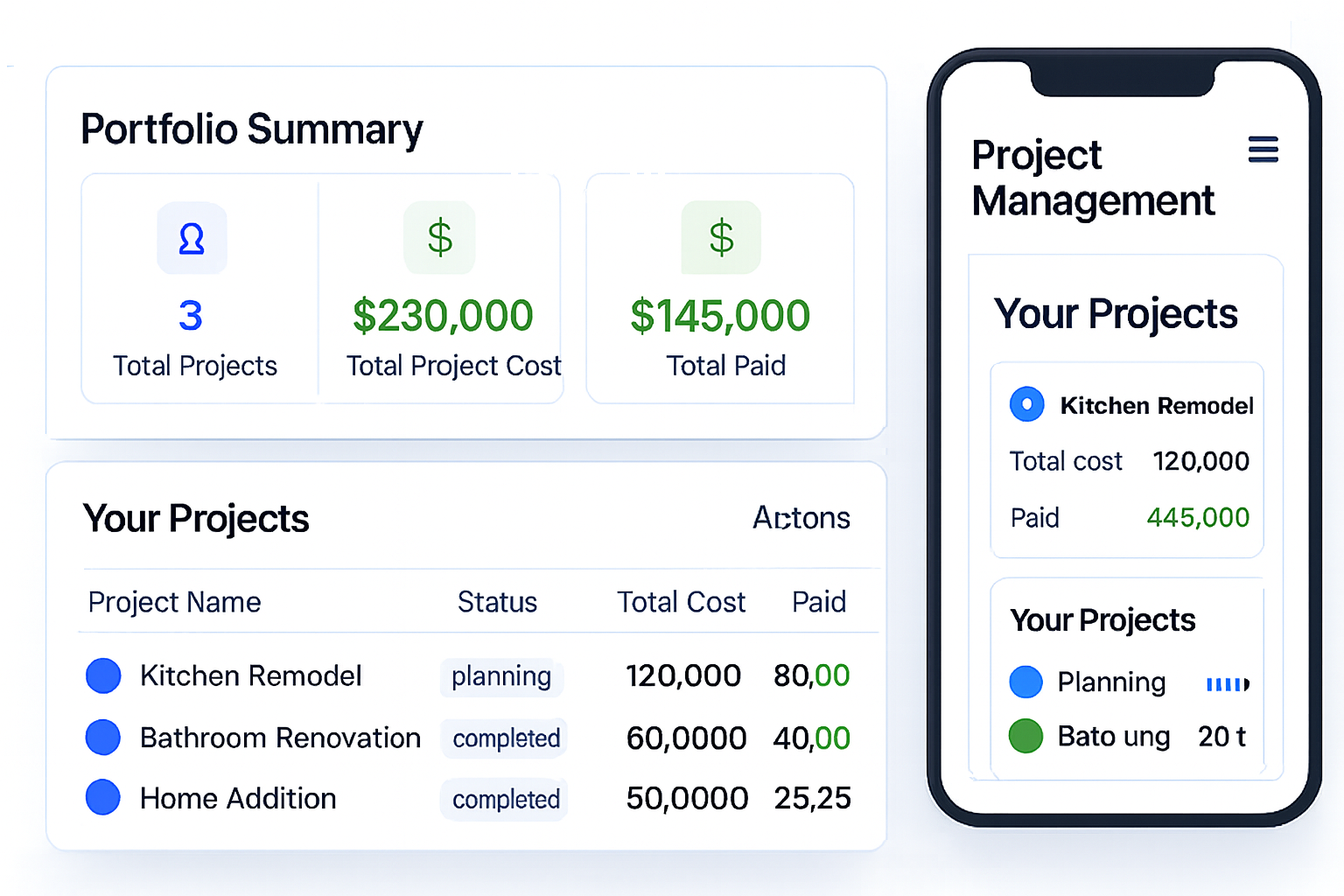
Keep a Detailed Record of all your Home Improvements
Maintain a home improvement record and document your capital expenditures for your property (e.g., kitchen or bathroom remodels, roof replacements, new appliances). Include dates, contractor, invoices, and amounts.
REMODELUM’S TRACKER FEATURES
Key Features of Remodelum’s Tracker
-
Get Your Renovation Finances Under Control: Easily build your renovation budget and adjust it along the way.
Record all payments (past, pending and expected) and invoices -
Simplify Your Renovation Management: Easy to use, click and go renovation management platform. Upload scope of work or invoices to automatically record information
-
Record contractor information, contracts, dates, invoices and payments. Record purchased item details and invoices
-
Build a log with the details of all the home improvement projects performed. Store invoices, contractors and dates for future reference
-
Add Contributors to your project so they can check progress and store information. Inform with Contractors of the specifics of their slice of the project
TRACK YOUR RENOVATION ROI
Maximize Your Renovation ROI
If you’re managing a multiple properties or planning a major remodel for resale, Remodelum helps you stay on top of every dollar. Create detailed budgets by category, compare contractor quotes side-by-side, and monitor actuals vs plan in real time. Stay organized and protect your margins with built-in tools for tracking invoices, change orders, and payments.
RENOVATE WITHOUT THE NEED OF SPREADSHEETS
HEADACHE-FREE RENOVATIONS
User Testimonials
-
“Remodelum is an incredibly helpful tool in all the chaos of construction. Running the budget is always the least enjoyable part of project management but Remodelum actually makes it fun and is giving me a better sense of control"
Lisa M., San Diego, CA
-
“Starting my renovation felt overwhelming until I found Remodelum. The platform helped me build my budget and select my contractor”
Steve R., Austin, TX
-
“Thanks to Remodelum, we were able to manage our renovation budget with confidence. It was like having a personal finance assistant!"
Sarah W., Orlando, FL
FAQs
-
Yes! Remodelum allows you to log every expense, compare it to your original budget, and see how much you’ve spent vs. how much is left. You can tag categories like labor, materials, permits, and more.
-
Yes, Remodelum is free with features like budgeting, quote comparison, document storage, and payment tracking.
-
You start by entering your planned renovation budget, then add actual costs as they come in. The tracker updates in real-time, so you can spot overruns early and make smart adjustments.
-
Yes. Remodelum lets you invite collaborators so you can share budgets, documents, and timelines with your spouse, contractor, or designer.
-
Our app works for all renovation types—from full home remodels to kitchen upgrades, bathroom renovations, or even room additions. You can track multiple projects in one account.
-
Absolutely. You can upload and compare contractor quotes, mark invoices as paid, and attach receipts or warranties to each entry.
-
Track remodeling expenses by project, room, or contractor</li>
Monitor actual spending vs your renovation budget</li>
Upload invoices, receipts, and payment records</li>
Track payments, deposits, and balance due for contractors
Stay on top of every renovation dollar and avoid budget overruns
-
Homeowners managing DIY renovations
Property owners hiring contractors
Real estate investors and house flippers
First-time home buyers planning upgrades
Anyone looking to avoid renovation surprises